Machiavelli II: The Three Branches of Ethics
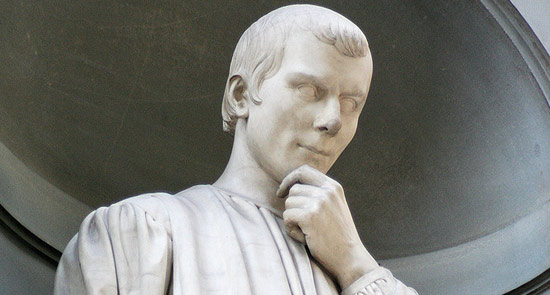
Machiavelli, Part the Second: in which terms are defined, moral codes collided, teachers betrayed, a hypothetical man executed, Batman and Sherlock Holmes placed before the reader’s judgment, and Machiavelli never actually appears.
See also Part I: S.P.Q.F., and Part I addendum.
Ethics, or moral philosophy, is the branch of philosophy which deals with decision-making, how we separate correct from incorrect action. A moral philosophy, or ethical system, is the set of criteria by which an individual judges whether an action should or should not be taken. All ethical systems can, believe it or not, be separated into three categories, whose names are, to the eternal detriment of students, misleading and confusing. The three are Virtue Ethics (note, does not necessarily involve any concept of “virtue”), Deontology (no relation whatsoever to “ontology”), and the younger sibling, Utilitarianism, aka. Consequentialism. I will give away my ending here by saying that Machiavelli is the founder of Utilitarianism, and that few changes in the history of thought have so radically transformed the human world. But for the moment we shall live in a world without Consequentialism, for it is in such a world that Petrarch, and Savonarola, and the young Machiavelli find themselves.
Virtue Ethics is any ethical system which judges an action based on the interior motives and feelings of the actor. Did that person will a good deed when the person took that action? If so, it was a morally good action. Did the person will a wicked deed? If so, it was a morally wicked action. The primary question is of the character of the doer: is this a good person or a bad person while performing this action? Virtue Ethics is thus what leads to such legal terms as self-defense, heat of passion and premeditation. Yes this person killed another human being, but it was an act of self-defense: this person does not have the character of a murderer. Yes this person killed another, but (s)he was temporarily out of control due to shock and truma: this person does not have the character of a murderer. Yes this person killed another, but it was a rash, improvised action, not the result of days and weeks of maliciously plotting how to take human life: this person does have the character of a murderer but the flaw is not so deep, not so perverse, not so terrible.
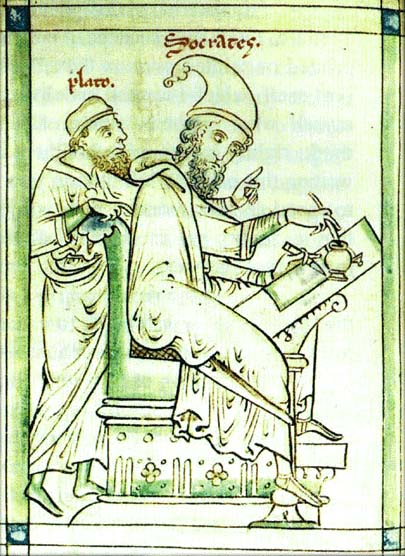
The father of Virtue Ethics is Plato, whose argument in The Republic attempts to define Justice. Is Justice, as one interlocutor proposes, “The will of the stronger?” Is it “the law?” Plato concludes, defines Justice and other virtues as “a harmony of the soul,” i.e. an interior quality independent from any action. In such a system a man is equally virtuous, whether Fortune sends him to rescue a drowning child, to plunge into bloody battle, or to sit in solitary meditation, if his inner state remains the same. Plato also concludes that it is virtue—the inner harmony of the soul—which makes people happy, rather than wealth or fame or power, which bring with them stresses, risk, and, often, the very opposite of happiness.
Deontology is any ethical system which judges action based on a presumed-universal set of laws or rules external to the doer. The rules, and their source, may vary enormously. A patriot who judges actions good or bad based on whether they are lawful or unlawful exercises deontology. A religious person who judges actions good or bad based on a code of conduct taken from a holy book exercises deontology. A philosopher practicing rational deism who judges actions good or bad based on a set of “natural laws” (s)he has logically derived from observations of Nature and human behavior exercises deontology. The uniting characteristic is the focus on rules. Examples: Killing another human being is wrong. Killing another human being over whom you do not hold paternal right of life or death is wrong. Eating an animal is wrong. Eating a certain type of animal is wrong. Eating an animal in a certain month is wrong. Burning a book is wrong. Permitting the circulation of a book whose dangerous content might lure people into eternal damnation is wrong. If there is a father of Deontology it is also Plato, since Plato is the first author to discuss such ideas and to contrast them with Virtue Ethics, but Plato is the first Western philosopher to discuss ethics at all. When his dialogs contrast different views voiced by different interlocutors, are we to credit Plato as the creator of all? Or shall we argue that deontology was already in the air as the “obvious” approach to what was not yet an “-ology.” For simplicity’s sake we can credit Plato as the father of ethics.
Having treated the father, Plato, I will take a split second to present the son, Aristotle (who broke violently [by philosophical standards] with his master and strode off either boldly into the truths of the Earth or foolishly back into the Cave, depending on whether you believe the apprentice or the master). Aristotle presents virtues as a mean between two vices, i.e. bravery is the mean between cowardice and foolhardiness; generosity between miserliness and prodigality. These are, as in Plato, internal qualities, and a brave man can be brave even if he never has the opportunity to show it. Yet Aristotle discusses what he calls habits of virtue. The idea is that someone who does not have the correct virtuous internal disposition might attain it gradually through practice. He who is not naturally generous can nonetheless practice giving to the poor and eventually, through practice, acquire a habit or instinct to give, and thus become generous. A coward who practices charging into danger might gradually become brave. A rebellious child who is forced, through the schoolmaster’s rod, to behave might eventually settle down and learn his grammar. This approach lies, distantly, behind the medieval Christian practices which say, if you’ve sinned, you can improve yourself by rote reciting prayers and giving alms. It lies even more distantly behind our modern practice of assigning public service hours as punishments for minor crimes.
Now, some practical examples of Virtue Ethics vs. Deontology:
EXAMPLE: Guido kills Paolo.
A virtue ethicist is not a position to answer at this point whether Guido has done good or bad. Most deontologists would also be unable to answer. If a deontologist follows a code like some strict forms of Buddhism which say that taking a life is always wrong regardless of the circumstances, such a deontologist could at this point say with certainty: Guido has done wrong. But for all others we need detail:
EXAMPLE 2: Guido is a professional executioner. He kills Paolo, executing a sentence ordered by the lawful government, for a capital crime which Paolo did indeed commit.
Now a broader range of deontologists can answer whether or not Guido has done wrong. In a deontological system in which the lawful government has a right to lethal force and is largely the source of the rules by which we judge (think Hobbes) then Guido has committed no evil. A deontologist who believes it is absolutely wrong to execute anyone can judge that Guido has done evil. Others may want to know what Paolo’s crime was (Murder? Rape? Adultery? Atheism? Public urination? Homosexuality? Freedom of speech?) to determine whether or not it indeed merits death.
Yet, in any or all of these situations, our unfortunate virtue ethicist still has no way to judge Guido because we need to know what is going on in Guido’s mind. Did Guido become an executioner because Guido looooooves killing people and jumped at a state-sanctioned way to do it? If so we would probably not call his action virtuous. Did Guido become an executioner because he saw a botched execution as a child, and thereafter determined to do it himself in order to strive to be as humane and respectful as possible to those about to face the undiscovered country? If so we might call this very virtuous. Was Guido drafted into Hitler’s army where he is following orders? Does he question them? Does he not? Was he brainwashed? Does he hate this task or does he do it unblinkingly? All these details the virtue ethicist must have before answering whether Guido is performing a morally good deed. (For anyone sitting here thinking: No! The Holocaust was unconscionable! No matter what the motives, if Guido was a Nazi it’s evil! Congratulations: you have identified a point in your personal ethics which is firmly deontological.) Note too that in all these executioner scenarios, it does not matter whether or not Paolo is guilty or innocent, deserving or undeserving of death. What matters is whether Guido thinks Paolo is guilty or innocent, etc.
“What about me?” objects voluntarism in a high, squeaky voice. Yes, I was just getting to you. Voluntarism is an ethical system which says that an act is only moral if it is good by both virtue ethics and deontology. That is, an act must be good and permissible by absolute external rules, and the doer must also have good motives while doing it. The quintessential example, for which we may thank William of Ockham (1288-1348), is a man who goes to church. “You may think this is a good act,” Ockham warns his presumed-Catholic High Medieval reader, “but what if the man goes to Church not for God’s sake or out of love and piety, but in order to show off his Sunday finery to his fellow man, and make political and economic connections to further his own earthly greed? Only if a man takes good actions for good reasons is true moral virtue present!” In a less formalized but also more emotionally powerful formulation, which has the distinction of being the first real manifestation of voluntarism in the history of philosophy, Heloise (1101-1164) spends her days in the nunnery praying, and fasting, and looking after the sick, and mortifying her flesh, and everyone tells her she is a very good nun and leading a virtuous life, but, she writes, “Even while I’m praying I spend all day thinking about how much I want to be having sex with Peter Abelard (1079-1142)” (slight paraphrase). “How is this morally good? How is this rote repetition of pious words and actions without feelings behind them supposed to help me become a better person?”
Thus we have deontology, virtue ethics and their child voluntarism. (Deontology: “A child conceived within the strictures of formally permissible union.” Virtue ethics: “And in love!”)
Care to spend a fun evening with your friends? Sit around picking interesting characters from various pieces of fiction and discussing whether they based their decisions on deontology or virtue ethics. This game brings endless delight, especially if you’re the sort who enjoys slotting various characters into the old Dungeons & Dragons Alignment Grid, since this categorization system is actually universally applicable, and leads to many fascinating distinctions and telling disagreements. You will also notice a pair of general patterns, at least in popular fiction of the last few decades, (1) that good guys tend to be more dominated by Virtue Ethics, and bad guys by other motives, and (2) the author or scriptwriter (very common in movies) tends to assume the viewer will judge the characters based primarily on Virtue Ethics.
Test cases:
Batman. Absolute commitment to never using lethal force: deontology. (Unless we think he refrains from killing out of fear of what killing would do to his moral character.)
Spiderman. Uncle Ben was killed because of Peter Parker’s selfish and vengeful impulse in that moment he let the thug go instead of using his powers for good. Why, then, does Peter dedicate himself to fighting crime? If it is because he has come to an absolute conclusion that with great power comes great responsibility, i.e. he is morally required to, that is deontology. If it is because he hopes to redeem the flaw in his character which led to his selfish decision, it is Virtue Ethics at its most habit-of-virtue Aristotelian.
Average Disney Hero. Battles villain to save princess, then villain conveniently falls off a cliff. The virtue ethicist remains content that no shadow is cast on the hero’s character. Hooray, we have neatly dodged any and all possible moral complexity!
Calaban. Prospero enslaves him and seizes control of his native island as punishment for Calaban’s attempted rape of Miranda. Virtue Ethics says Calaban is a horrible and malicious being, and that this punishment is just (unless you have a super-charming actor playing Calaban). Deontology’s answer depends on which of several different rights/laws the individual deontologist considers primary. Right of Conquest? If so, Prospero can do whatever he likes to Calaban. Right of sovereignty? If so Prospero is a wicked invader. Right of benefactor, to punish the ungrateful Calaban to whom Prospero taught and gave so much? Then Prospero is in the right. Right of host, to punish the ungrateful Prospero whom Calaban welcomed to his island? Then Calaban is in the right. Right to punish the terrible crime of rape? Only if the deontologist in question believes in some specific absolute code by which rape is criminal in this specific circumstance.
Sherlock Holmes. Tendency to bend the rules and let criminals escape when he thinks they are good people or generally should not suffer the vengeance of the law: Virtue Ethics. Or is it? In the case of the Blue Carbuncle, Holmes states “I am aiding a criminal, but I may be saving a soul.” Is this an application of religious deontology against law-code-based deontology? In the self-defense killing of The Abbey Grange, Holmes goes through the formula of an impromptu trial before releasing the homicide who he fears would be wrongly convicted in a real trial. Even when he burgles the master blackmailer Charles Augustus Milverton, he invokes the (deontological) duty of a gentleman to aid a lady in distress as his moral justification. Our perfect analytical reasoner walks a fine and subtle line on the edge of what feels like comfortable, emotional Virtue Ethics, but it is hard to catch him actually outstepping the bounds of what he would surely call universal rules of right and wrong. Holmes has, of course, enjoyed many versions, and I encourage everyone (especially fans of the Sherlock TV series) to examine how his ethics vary variant by variant.
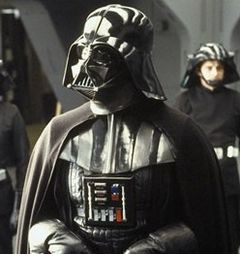
Personal favorite for this exercise: Darth Vader. [Do I really need a spoiler warning for this?] He betrays his master the Emperor to save his son. The film presents this as redemptive, and his spirit moves on to the vague glowy-person positive Manichean afterlife of the Star Wars special effects universe. Hooray. Virtue Ethics supports this absolutely, since the morally good side of his character has won out, even after so many evil deeds, proving him good inside. What about the deontologist? If we believe that an apprentice owes true fealty to his master, then this betrayal is a wicked act. If we believe that the father’s drive to protect his child is a natural and universal bond deeper than law, then this killing-in-defense is a good act. If we believe the Emperor was the legitimate ruler of the Empire and that its laws are binding, then this treason is a wicked act. If we believe the Emperor is a tyrant who has unjustly displaced the rightful Republic, then this tyrranicide is, potentially, a good act. What if the general Sith lifestyle says the apprentice is supposed to kill his master to take his place? Then Darth Vader is a lazy bum, and should’ve done this a long time ago. This is but one of many occasions in which Hollywood presents a narrative which is simple and easy to judge using virtue ethics—which is presumed to be the default in today’s audience—but much more complex if deontology rears its head.
 Or worse, the dreaded utilitarianism.
Murky waters lie before us as ethics’ third branch stirs from the depths.
Utilitarianism, or Consequentialism, is any form of ethics which judges an action based on the consequences of the action, rather than the action itself or the motive of the doer.
Guido killed Paolo before Paolo could push the nuclear destructor button and end all life on Earth. Guido killed Paolo before Paolo could exterminate a bus full of nuns and orphans. Guido killed Paolo before Paolo could kill ten nuns and ten orphans. Two nuns? One nun?
We moderns, saturated with utilitarianism, feel that these situations are different from one another, though feel discomfort with “the end justifies the means” and all feel that the scale gets slipperier and more uncomfortable as the numbers get smaller. Throughout these scenarios the deontologist’s view is unchanged, unless the set of rules the deontologist is applying has specific caveats for killing to defend life. The virtue ethicist is, of course, not in a position to judge, because the exploding nuns do not tell us Guido’s motive. If Guido killed Paolo in order to prevent the nuclear destruction of thousands of innocents, Guido is probably, by virtue ethics, not actively willing evil. But what if Guido didn’t know or care about the nuclear destructor button, and shot Paolo just because Guido loves shooting people? Or in order to steal Paolo’s avocado club sandwich? What if Guido is a government assassin who was hired to kill Paolo in order to save innocent lives, but who originally became a government assassin in order to have license to kill because Guido just loves, loves, loves killing? In all these cases Guido’s character is different, so the virtue ethicist must judge him differently, while most deontological systems would still pay attention mainly to the act itself. As for Utilitarianism, we have now entered the frightening realm where we must admit that even if Guido committed murder and did it out of love of snuffing out the human candle, it might have saved a hundred billion lives and it is hard to say flat out: that was a bad act.
No greater can of worms has been opened in philosophy’s long march. Several equal perhaps, none greater.
Questions multiply:
- How many lives must Guido save before killing Paolo is justified?
- What if Paolo is a drowning baby and Guido saves him, but then Paolo grows up to become an evil overlord and slaughters millions? Does the rescue become retroactively evil?
- If, with our finite perspectives, we cannot ever know the infinite consequences of any particular butterfly wing-beat, let alone moral choice, can we ever in fact say with certainty that any act is good or bad? Have we, in fact, surrendered the capacity to judge at all?!
- And, stepping back one level, the historical question: If deontology and virtue ethics were both created at the very spark-birth of philosophy, why did it take 1,800 years for the third (to us equally obvious) branch to come into being?
Ah, friends: before we can have utilitarianism, we must have Borgias! Before we can understand why this this third mode of human thought was born, nearly two millennia into the unassailed riegn of the original two, I must narrate the papacy’s darkest and, in my view, most exciting hour. And before I can devote myself to the events around 1503, I must reserve a few days for my own affairs in 2012.
Continued in Machiavelli III: Rise of the Borgias
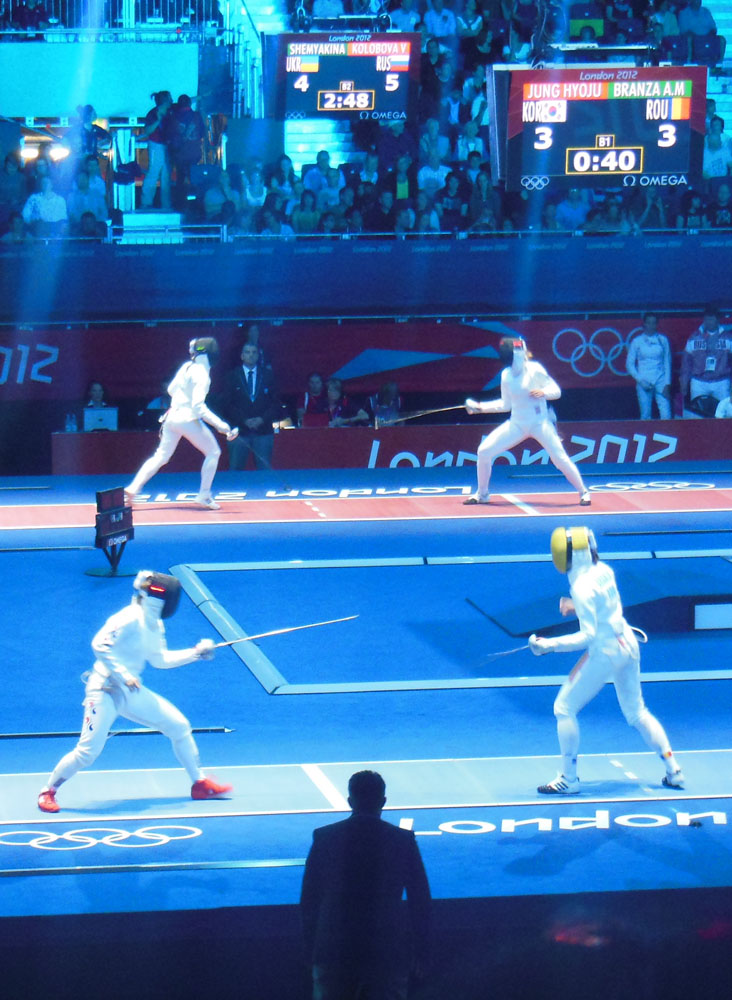
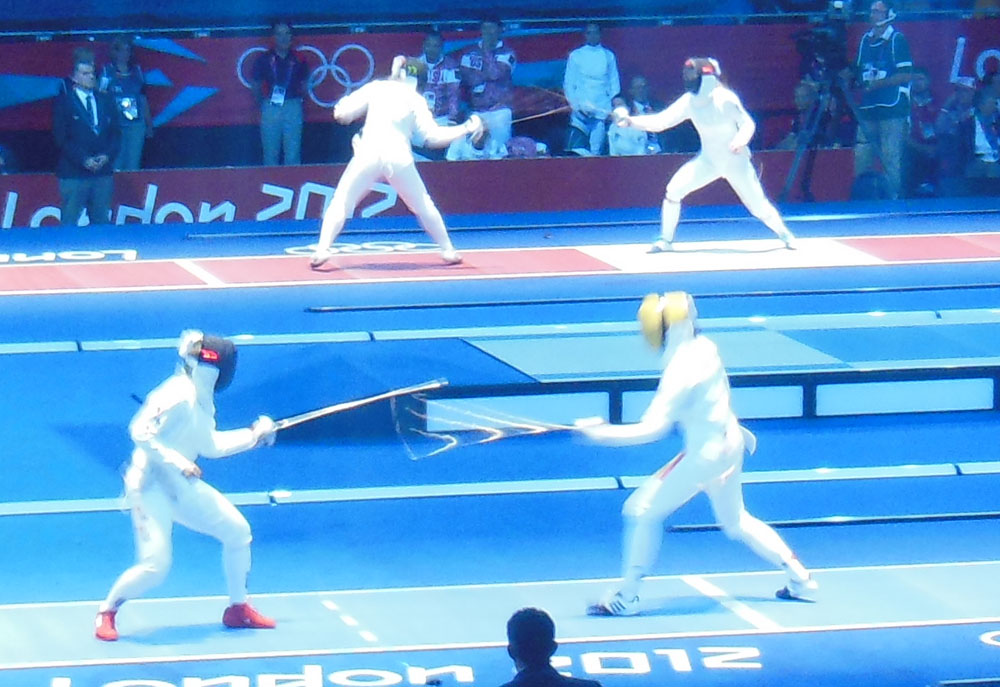
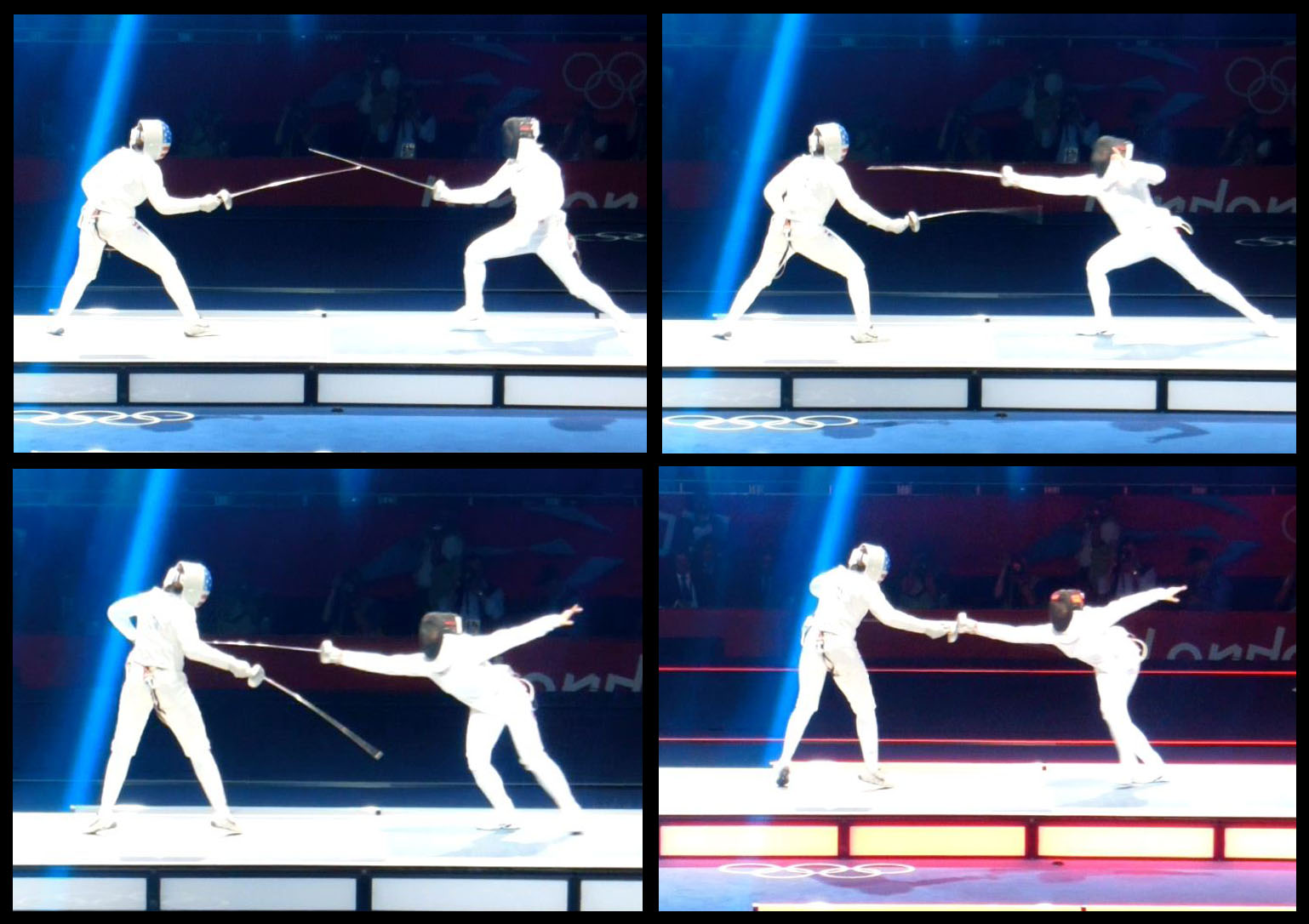
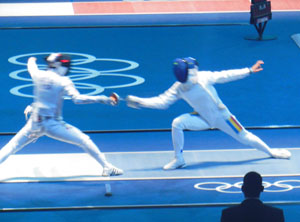
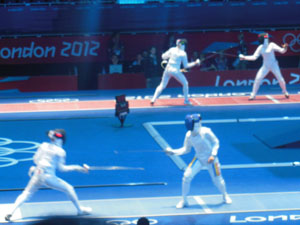
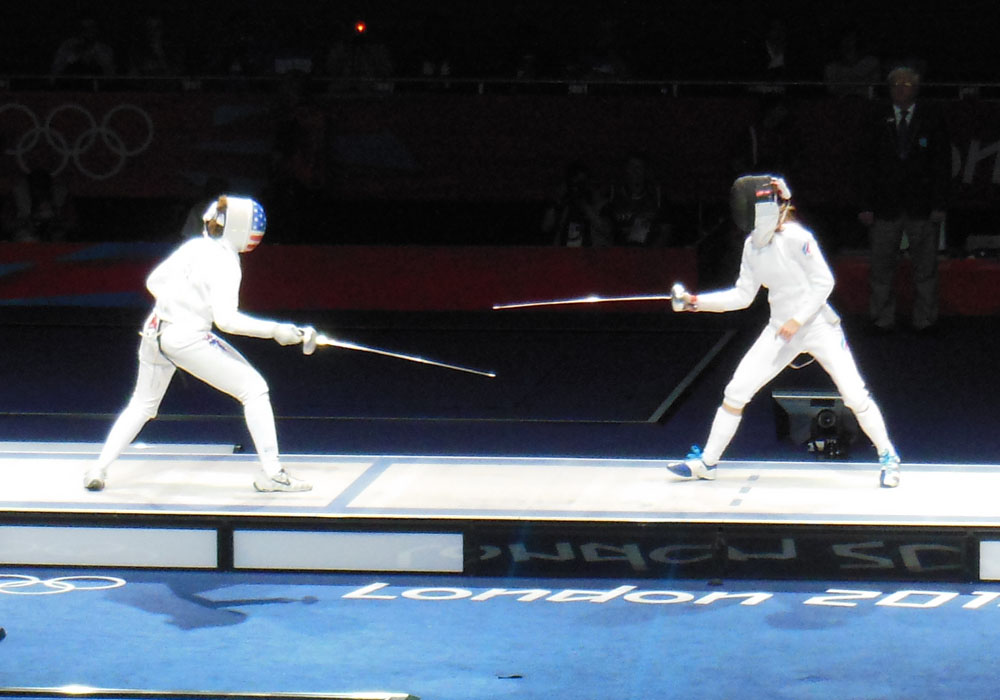
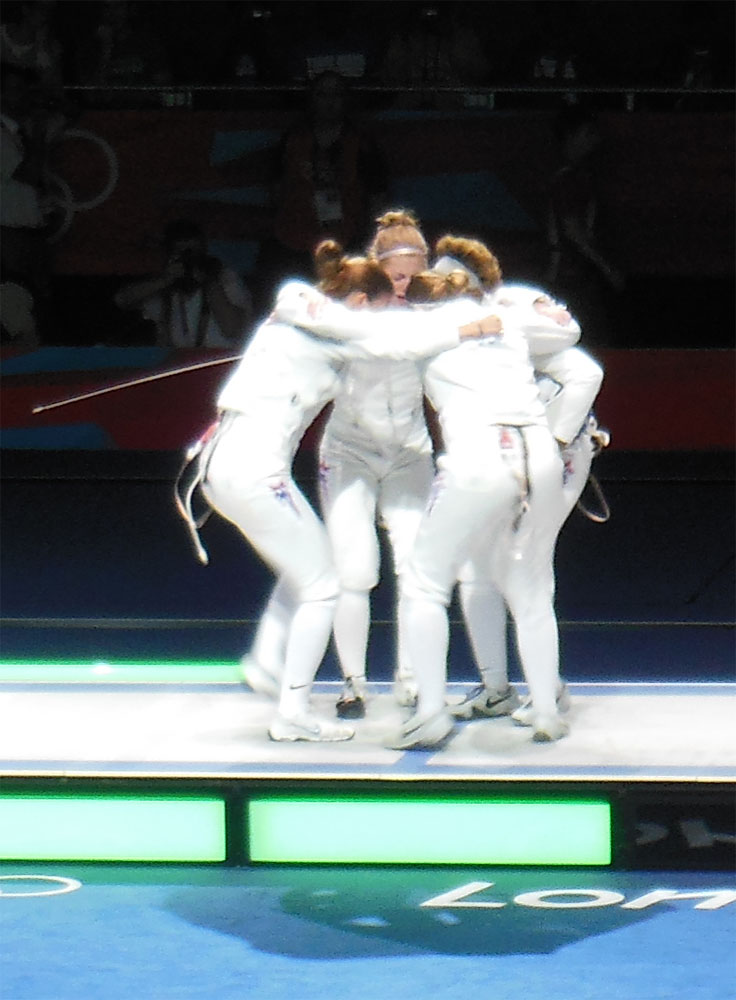
 Since our chance to watch it is this weekend, I can’t resist a quick plug for what I consider easily the most exciting Summer Olympic sport, despite being generally regarded as the most obscure: the Modern Pentathlon. I know most mixed events are obscure and, at first glance, somewhat arbitrary, but when you learn the idea behind the Pentathlon, even the most hardcore non-sports-fan has to get somewhat excited.
 The competition is a test of the skills required when escaping from behind enemy lines after being captured. The competitors must fence (staving off the guards), shoot with a pistol (stolen from the enemy), swim (crossing a river), ride jumping over barriers on an unfamiliar horse (again stolen from the enemy), and run to a finish line (representing the safe border of friendly territory). The riding event on a horse the competitor has never met before is a particularly tricky variant on show jumping. The swim, fencing and riding are held earlier in the day, and successes or failures there are translated into points which turn translate to head starts or handicaps in the foot race, at which the first to the finish line is victor. In recent versions, the shooting has been done during the run itself, so the athlete (i.e. escapee) must stop mid-run at maximum exertion and then shoot a target (i.e. enemy assailant). The faster a competitor can land the required shots accurately on the target, the sooner he or she can return to the all-important run. Like in the biathlon (whose combo of skiing and shooting represents northern European military exercises), it takes a special kind of physical mastery to keep the racing heart, shaking and quick breathing from the run from unsteadying the hand.